Public showcase · Data Reporting & Pipeline Ops · Internal Tooling & Dashboards
JibJob Healthcare ATS Aggregation.
A production healthcare job aggregation system that discovers, fetches, normalizes, enriches, and verifies ATS job feeds.
A production healthcare job aggregation system that discovers, fetches, normalizes, enriches, and verifies ATS job feeds.
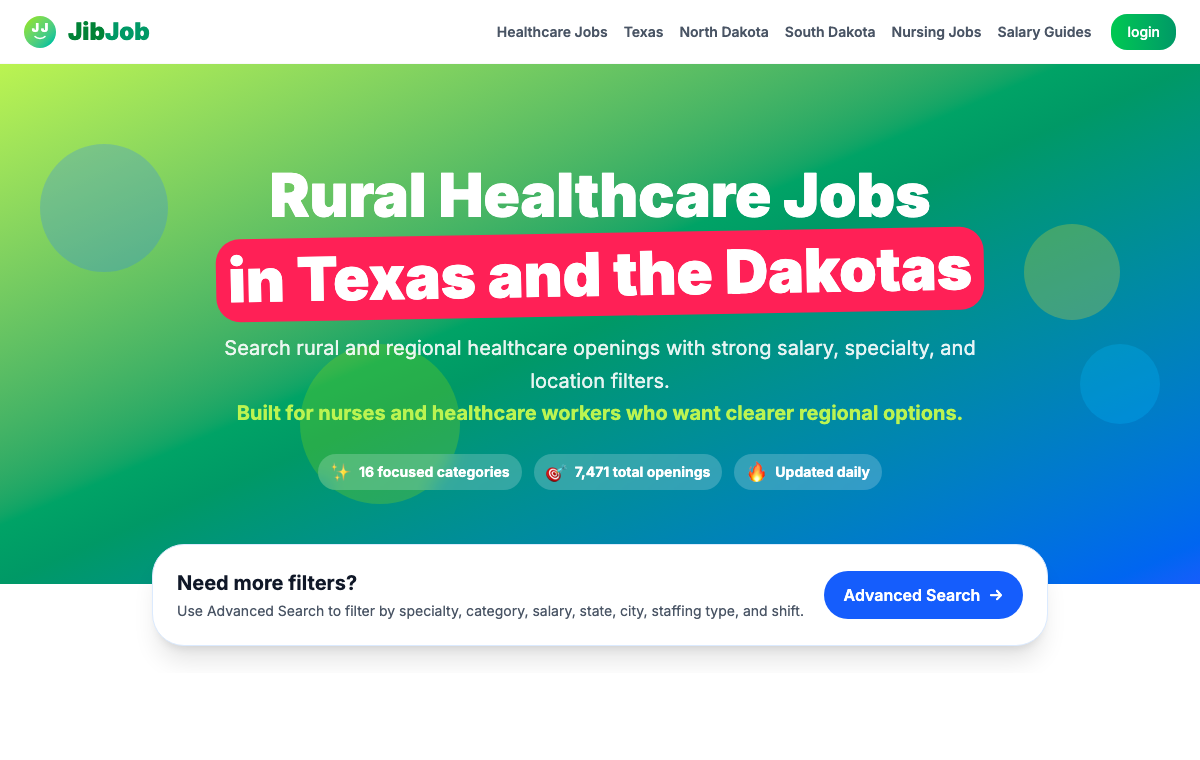
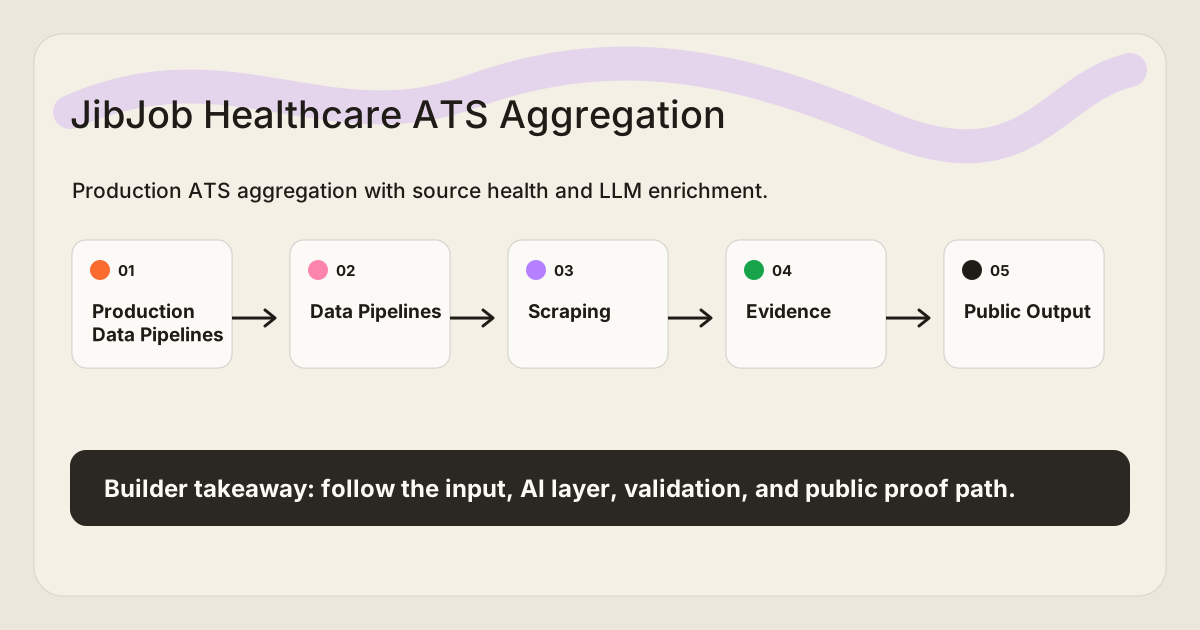
JibJob turns messy healthcare ATS feeds into searchable job pages by discovering sources, fetching jobs, normalizing fields, enriching records, and verifying production runs.
The pipeline treats each employer ATS as an unreliable source that needs explicit handling. Sources are registered, workers fetch bounded batches, normalizers convert ATS-specific payloads into a common job model, and verification checks whether the imported jobs reached public product surfaces.
The AI layer is practical rather than decorative: LLMs help classify or enrich messy labor-market data, while source health reporting catches broken scrapers, empty feeds, and stale runs. This is a production data-pipeline pattern for AI builders who need reliability more than a flashy chat interface.
Each source gets its own URL, adapter type, location metadata, and health history so failures can be diagnosed at the source level.
type AtsSource = {
  name: string;
  atsType: "workday" | "icims" | "greenhouse" | "custom";
  atsUrl: string;
  city?: string;
  state?: string;
};Workers collect raw postings, map them into a shared job shape, then use AI-assisted cleanup only where deterministic parsing is not enough.
The workflow is not complete until a job appears on a browsable public page and source health reports the run outcome.
| Tool | Version | Role | Why this tool |
|---|---|---|---|
| ATS adapters | Current | Extraction | Different healthcare employers expose jobs through different vendor shapes. |
| LLMs | Current | Enrichment | Helps classify and clean ambiguous job metadata after deterministic parsing. |
| Sanity | Current | Content store | Stores normalized jobs and source records for operational review and publishing. |
| Next.js / Vercel | Current | Public delivery | Turns imported jobs into fast indexed location and job-detail pages. |
| Source health checks | Current | Monitoring | Surfaces stale runs, empty imports, and broken adapters before the product looks thin. |
SystemYou normalize healthcare job metadata without inventing facts.
User templateRaw title: <title> Description excerpt: <description> Return normalized specialty, seniority, and confidence. Use null when unknown.
Privacy. Use aggregate counts, sanitized job examples, and public pages only.